The Season’s Over: 6 Essential Tasks Before You Put Your Traps Away
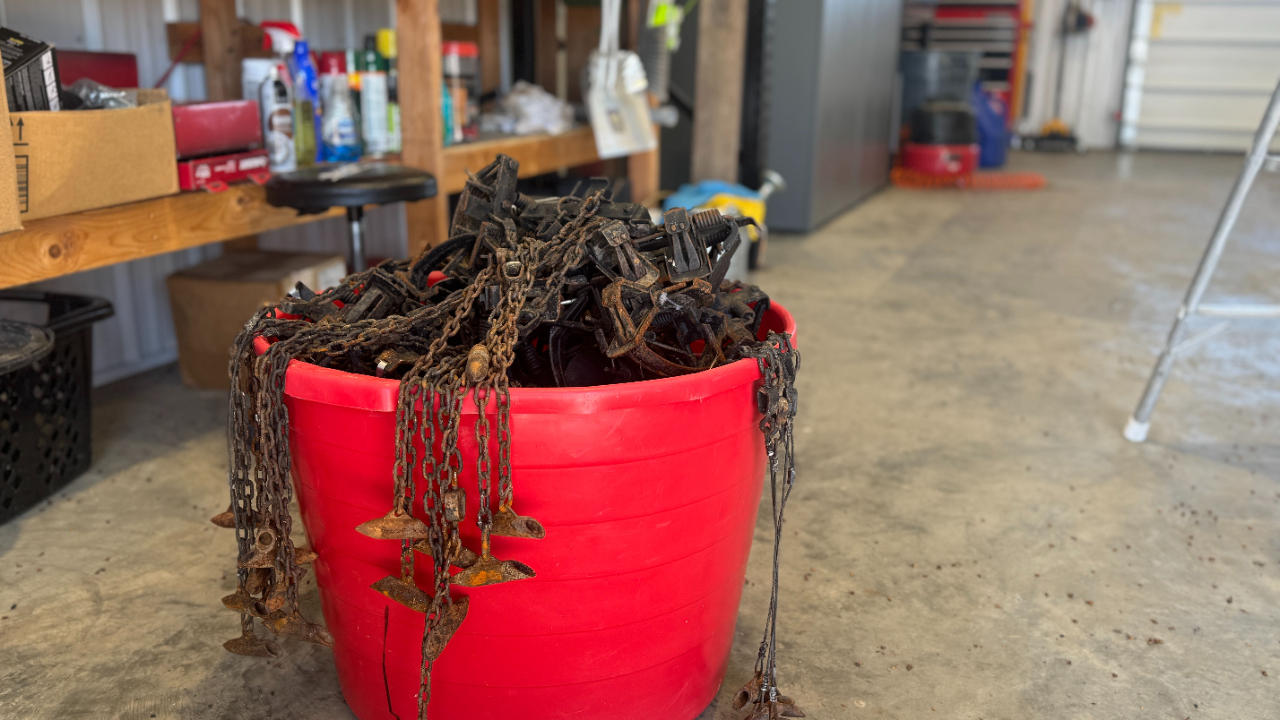
The season is officially in the books. While it’s tempting to just toss your gear in a pile and forget about it until next fall, a little "trapline hygiene" now will save you hundreds of dollars in overly rusted gear, curse words come fall, and possibly lost fur later!
Here is your end-of-season checklist to ensure your equipment is ready to go the moment the weather breaks next year.
1. The Great Retrieval: Managing Earth Anchors
Don't leave your money in the ground. When you pull your sets, make sure you're properly knocking out those earth anchors.
-
Pro Tip: Use a dedicated puller or a heavy-duty stake puller to avoid straining your back or snapping your chain. If an anchor is truly stuck, sometimes it’s better to cut the cable than to ruin a trap frame trying to force it.
2. The Deep Clean: Pressure Washing
Your traps have been through the mud, blood, and salt. They need a reset.
-
The Process: Take your traps to a car wash or use a pressure washer at home. You want to strip off the heavy gunk, old wax, and any remaining biological scent.
-
Why it matters: Leaving salt or moisture trapped under old wax is the fastest way to ruin your springs.
3. Inspection & Tuning
Before these hit the storage bin, give each trap a 30-second physical.
-
Check for bent levers or dogs.
-
Ensure the pans are still level and the tension is where it needs to be.
-
Tagging: If a trap is broken or out of shape and you feel like dealing with it next season, tag it with a piece of colored electrical tape so you know it needs a repair job this summer.
4. Organize Your Lures and Baits
Don't let your RJ's "Country Boy" skunk lure turn into a "garage-ruining leak." Keep your wife happy!
-
Wipe down the outside of every jar and bottle.
-
Tighten lids and store them in a cool, dark, dry place.
-
If a lure is nearly empty, add it to your shopping list now while the memory of how it performed is still fresh or visit Rusty Johnson's Predator Lures and restock now.
5. Inventory Your Consumables
How many
Write down exactly what you used up. Buying your supplies in the "off-season" often leads to better deals and ensures you aren't scrambling when opening day rolls around again.
6. Storage: Keep it Clean, Keep it Scent-Free
Once your traps are dry and inspected, don't just hang them on a nail in the garage next to your lawnmower.
-
The Container: Store your traps in a clean, dedicated plastic bucket or a sturdy cardboard box.
-
The Environment: Keep them away from gas cans, oil, wood smoke, or household chemicals. Steel is porous and will soak up those "unnatural" odors over the summer.
-
Pro Tip: Toss a few pine boughs or a handful of dried leaves into the bin with them. It keeps the traps smelling like the woods, not your workshop.
Now What?
Now it's time to sit back and relax! You've wrapped up another trapping season. Was it successful? Want to make sure you're using the most effective sets next season? Check out our 12-set arsenal to expand your skills while the traps are in storage!